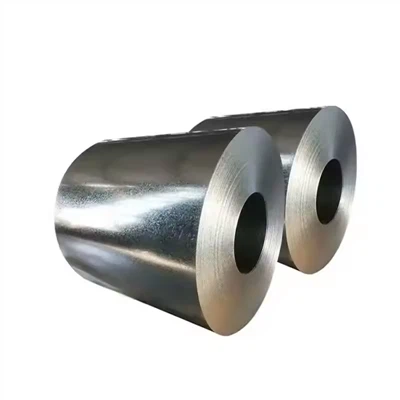
Galvanized steel coil, a steel product with a zinc-coated surface, is widely used in numerous industrial and residential applications due to its excellent corrosion resistance and mechanical strength. The choice of its application environment directly affects its service life and performance, so understanding the adaptability of galvanized steel coils in different environments is crucial.
1. General Atmospheric Environments
In normal atmospheric environments, such as those found in urban buildings, bridges, and steel structure factories, galvanized steel coils exhibit excellent weather resistance. The zinc coating effectively isolates moisture and oxygen from the air, slowing the oxidation process of the steel and thus extending its service life. In areas with low pollution and low humidity, galvanized steel coils are particularly effective in preventing corrosion, typically remaining rust-free for decades.
2. Humid and Marine Environments
In environments with high humidity or near the ocean, steel is susceptible to chloride ion attack, which accelerates rust. The zinc coating of galvanized steel coils still provides some protection in these environments, but long-term exposure may gradually degrade the zinc coating. Therefore, in coastal areas or environments with high salt fog, it is recommended to use galvanized steel coils with a higher zinc coating thickness or combine them with other anti-corrosion measures (such as coatings) to enhance their protection.
3. Industrial Polluted Environments
In industrial areas, corrosive gases such as sulfur dioxide and nitrogen oxides in the air can accelerate the corrosion of steel. Galvanized steel coils maintain good corrosion resistance in mild industrial pollution environments, but in highly polluted areas, the zinc coating may be degraded more rapidly due to chemical reactions. Therefore, in such environments, it is recommended to select galvanized steel coils with higher protection levels, such as hot-dip galvanizing (GI) or alloyed galvanizing (GA), and perform regular maintenance.
4. Underground and Buried Environments
In underground or buried applications (such as pipelines and cable racks), the zinc coating of galvanized steel coils provides resistance to soil moisture and chemical attack, but its corrosion resistance is affected by soil pH, salt content, and air permeability. In acidic or highly saline soils, the corrosion resistance of galvanized steel coils may be reduced, necessitating additional anti-corrosion treatments such as epoxy coating or cathodic protection.
5. High Temperature and Special Environments
Galvanized steel coils exposed to high temperatures (e.g., exceeding 200°C) may experience oxidation or reaction between the zinc layer and the substrate, leading to decreased adhesion. Therefore, caution is advised when selecting galvanized steel coils for high-temperature applications, or alternative high-temperature-resistant materials should be used. Furthermore, the protective effect of the galvanized layer is limited in extreme chemical environments, such as those with strong acids and alkalis. Stainless steel or other specialty steels should be selected.
Conclusion
Galvanized steel coils, with their excellent corrosion resistance and cost-effectiveness, are suitable for most general environments, particularly in general atmospheres, construction, and mildly corrosive environments. However, in special environments such as high salt spray, strong acids and alkalis, or high temperatures, the selection strategy must be adjusted based on the specific conditions, or other anti-corrosion technologies must be combined to ensure long-term reliability. Properly assessing the operating environment and selecting the appropriate galvanizing process are key to fully realizing the performance of galvanized steel coils.