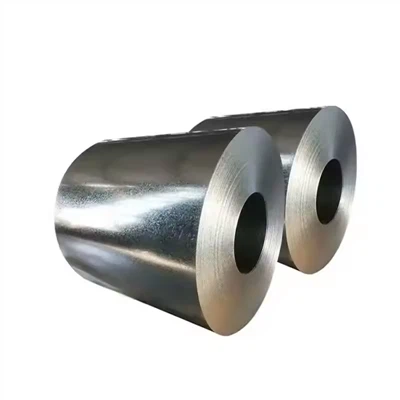
As a key derivative of the steel industry, galvanized steel coil has become an indispensable foundational material for modern manufacturing and construction due to its excellent corrosion resistance and wide range of applications. The production process involves immersing cold-rolled or hot-rolled steel coils in molten zinc, forming a dense zinc-iron alloy protective layer. This significantly enhances the steel's corrosion resistance and extends its service life.
From a technical perspective, the core advantage of galvanized steel coil lies in its dual protection mechanism. The zinc layer not only acts as a physical barrier to isolate moisture and oxygen, but also preferentially corrodes itself through a sacrificial anodic reaction, thus protecting the underlying steel. This property ensures structural stability in harsh environments such as humidity and salt spray, leading to its widespread use in bridges, ships, and automotive manufacturing. Furthermore, the diverse galvanizing processes-such as hot-dip galvanizing (GI) and electrogalvanizing (EG)-further address the diverse requirements of various industries for surface gloss, coating thickness, and mechanical strength.
In the construction sector, galvanized steel coil is an ideal choice for steel structures, roof curtain walls, and ventilation duct systems. Its lightweight properties reduce transportation and construction costs, while its high strength and durability ensure the long-term safety of buildings. The home appliance manufacturing industry also relies on galvanized steel coils for products such as refrigerator casings and washing machine frames. The decorative and anti-fingerprint properties of the zinc coating enhance the market competitiveness of end products. In recent years, with increasing environmental protection requirements, pre-coated galvanized steel coils (also known as color-coated galvanized steel sheets) have emerged, combining corrosion protection with aesthetic design, driving innovation in building facades and high-end home appliances.
However, the production of galvanized steel coils also faces challenges. Issues with zinc resource and energy consumption are prompting the industry to explore more efficient coating processes, such as zinc-aluminum-magnesium alloy coating technology, to balance performance and sustainability. In the future, with the advancement of intelligent manufacturing and green metallurgy, galvanized steel coils will further evolve towards high precision and multifunctionality, showing greater potential in emerging fields such as new energy equipment and rail transportation.
In summary, galvanized steel coils are not only a pillar material for traditional industries but also a vehicle for innovation in modern engineering technology. Their continuously improving performance and wide applicability will continue to provide key support for global infrastructure construction and manufacturing upgrades.