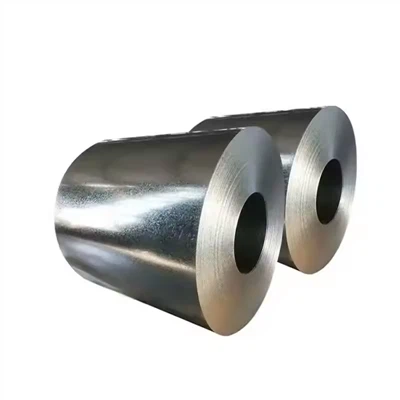
Galvanized steel coil is a key steel product used in advanced processing, widely used in construction, automotive, and home appliances. Its quality directly impacts the performance and lifespan of downstream products.To ensure that galvanized steel coils meet standard requirements, a systematic inspection process rigorously evaluates multiple key material parameters. The following details the standardized inspection process for galvanized steel coils, focusing on appearance, dimensions, coating quality, and mechanical properties.
I. Appearance Inspection
Appearance inspection is the primary step in evaluating the quality of galvanized steel coils. It primarily involves visual inspection or low-power magnification to observe surface defects. Inspection includes:
1. Surface Cleanliness: Inspect the coil surface for residual oil, rust, or scale, ensuring the absence of visible contaminants.
2. Coating Uniformity: Observe the coating for continuity, absence of missing coatings, bubbles, cracks, or flaking, paying particular attention to coating coverage around the edges and coiling area.
3. Mechanical Damage: Inspect for scratches, dents, and other physical damage that may affect subsequent processing or performance. During inspection, the unrolled portion of the steel coil must be continuously inspected at a constant speed under sufficient lighting conditions (typically ≥500 Lux), and the type and location of defects must be recorded.
II. Dimensional and Appearance Inspection
Dimensional accuracy is essential for galvanized steel coils to meet application requirements. Professional instruments are required to measure the following parameters:
1. Thickness: Using a magnetic thickness gauge or X-ray thickness gauge, measure the total thickness of the galvanized layer (base + coating) and the thickness of the pure coating at multiple points along the width of the coil. The tolerance is typically within ±0.05mm.
2. Width: Measure the actual width of the coil using a laser rangefinder or tape measure. The deviation must comply with the requirements of the order or standard (e.g., GB/T 2518-2019).
3. Inner and Outer Diameter: Check that the inner diameter of the coil core (commonly 508mm or 610mm) and the overall coil diameter meet packaging specifications to prevent deformation during transportation.
4.Flatness: A flatness tester is used to inspect the steel coil for issues such as wavy edges and warping to ensure feasibility for subsequent flattening processing.
III. Coating Quality Inspection
The performance of the galvanized coating directly impacts the corrosion resistance of the steel coil and requires evaluation through several specialized tests:
1.Coating Weight: The coating weight per unit area is measured using a gravimetric method (first weighing the bare steel sheet, then weighing the galvanized steel sheet, and calculating the difference) or an electrochemical method (generally requiring ≥ 60g/m² on both sides).
2.Adhesion: The bonding strength between the coating and the substrate is verified using a cross-hatch test (using a knife to scratch a grid on the coating surface and observe for coating flaking) or a bend test (bending the steel coil sample 180° and inspecting the coating edge for cracking).
3.Salt Spray Resistance: For some high-demand products, samples are subjected to a neutral salt spray (NSS) test. Samples are exposed to specific temperature and humidity conditions for a specific period of time (e.g., 240 hours) to evaluate the coating's resistance to white rust.
IV. Mechanical Properties Testing
The mechanical properties of galvanized steel coils must meet the strength and forming requirements of downstream processing. Routine testing includes:
1. Tensile Testing: Transverse specimens are cut from the head or tail of the coil and tested for yield strength, tensile strength, and elongation using a universal testing machine. The results must meet the corresponding grade standards (e.g., yield strength ≥ 235 MPa for Q235B galvanized steel).
2. Hardness Testing: The surface hardness of the coil is measured using a Rockwell or Brinell hardness tester, indirectly reflecting the degree of work hardening.
V. Chemical Composition Analysis (Optional)
For galvanized steel coils for special applications (such as weathering steel and high-strength steel), the chemical composition of the substrate (e.g., carbon, manganese, sulfur, and phosphorus content) must be further tested. Typically, an optical emission spectrometer (OES) or chemical titration is used to ensure that the composition meets design requirements.
VI. Test Report and Verdict
After all tests are completed, the data must be summarized and a standardized report generated. This report includes the test items, methods, measured values, standard requirements, and the verdict (pass/fail). If any individual indicator is found to be substandard (e.g., insufficient coating thickness or poor mechanical properties), expanded sampling and re-inspection of the same batch of steel coils will be required, and quality traceability procedures will be initiated if necessary.
Conclusion
The inspection process for galvanized steel coils is a critical step in ensuring product quality and must strictly adhere to national standards (such as GB/T 2518 and ASTM A653) as well as customized customer requirements. Systematic testing of appearance, dimensions, coating, and mechanical properties effectively screens for defective products, providing a reliable material foundation for downstream applications while also helping companies enhance their market competitiveness and brand reputation.