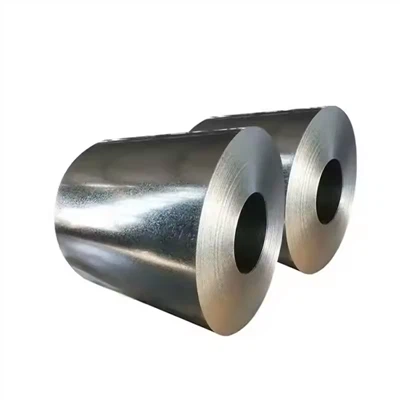
Coil set, a common issue in the steel industry, refers to the residual curvature or bowing in a steel coil after it has been uncoiled. This phenomenon can significantly affect the quality and usability of the steel, leading to problems in subsequent manufacturing processes. As a steel coil supplier, we are well - versed in dealing with this issue and are committed to providing our customers with high - quality steel coils free from excessive coil set. In this blog, we will delve into the causes of coil set and explore effective methods to correct it.
Understanding the Causes of Coil Set
Before we can correct the coil set, it is essential to understand what causes it. Several factors contribute to the development of coil set in steel coils:
- Rolling Process: During the rolling process, the steel is subjected to high pressure and deformation. Uneven pressure distribution across the width or thickness of the steel strip can lead to residual stresses, which manifest as coil set when the coil is uncoiled. For example, if the rolls are not properly aligned or have uneven wear, it can result in inconsistent deformation of the steel.
- Cooling Rate: The cooling rate of the steel after rolling also plays a crucial role. If the steel cools unevenly, different parts of the coil will contract at different rates, creating internal stresses. This is often the case when large - diameter coils are cooled rapidly on the outside while the core remains hot for an extended period.
- Coiling Tension: Improper coiling tension can cause the steel to be wound too tightly or loosely. Excessive tension can stretch the outer layers of the coil, while insufficient tension may allow the inner layers to shift, both of which can lead to coil set.
Methods to Correct Coil Set
1. Leveling
Leveling is one of the most common methods used to correct coil set. It involves passing the steel strip through a series of leveling rolls, which apply pressure to the strip to flatten it. The leveling process can be adjusted to accommodate different thicknesses and widths of steel.


- Two - Roll Levelers: This type of leveler consists of two large rolls that rotate in opposite directions. The steel strip is fed between the rolls, and the pressure applied by the rolls helps to reduce the coil set. Two - roll levelers are suitable for thick - gauge steel and can provide a high degree of leveling accuracy.
- Multi - Roll Levelers: Multi - roll levelers have multiple small rolls arranged in an alternating pattern. These rolls can be adjusted to control the amount of pressure applied to the steel strip. Multi - roll levelers are more versatile and can be used for a wider range of steel thicknesses and coil set conditions. They are particularly effective for correcting minor to moderate coil set in thin - gauge steel.
2. Temper Rolling
Temper rolling, also known as skin - pass rolling, is another effective method for correcting coil set. In this process, the steel strip is passed through a pair of rolls with a small amount of reduction. The primary purpose of temper rolling is to improve the surface finish of the steel and to reduce the yield point elongation, but it also helps to relieve internal stresses and correct coil set. By controlling the rolling force and the reduction ratio, the temper rolling process can be optimized to achieve the desired level of flatness.
3. Stress Relief Heat Treatment
Stress relief heat treatment can be used to correct severe coil set. The steel coil is heated to a specific temperature below its critical transformation temperature and held there for a certain period. This allows the internal stresses in the steel to relax, reducing the coil set. However, this method requires careful control of the heating temperature and time to avoid affecting the mechanical properties of the steel. After heat treatment, the coil may need to be slowly cooled to prevent the formation of new internal stresses.
Quality Control in the Coil Set Correction Process
As a steel coil supplier, we understand the importance of quality control in the coil set correction process. Here are some key aspects of our quality control measures:
- Initial Inspection: Before any correction process, we conduct a thorough inspection of the steel coil to determine the extent and nature of the coil set. This includes measuring the curvature and bowing of the strip using precision instruments. Based on the inspection results, we can select the most appropriate correction method.
- Process Monitoring: During the correction process, we closely monitor the parameters such as roll pressure, tension, and temperature to ensure that they are within the specified range. Any deviation from the set parameters can affect the quality of the correction, so real - time monitoring and adjustment are essential.
- Final Testing: After the coil set correction, we perform a final inspection to verify the flatness of the steel strip. This may involve visual inspection as well as more sophisticated measurement techniques such as laser scanning. Only when the steel strip meets our strict quality standards will it be approved for shipment.
Our Product Range
We offer a wide range of steel coils to meet the diverse needs of our customers. Some of our popular products include:
- Galvalume Steel Coil Suppliers: Galvalume steel coils are coated with a zinc - aluminum alloy, providing excellent corrosion resistance and a long service life.
- Galvanized Steel Sheet In Coil: These coils are hot - dip galvanized, which offers protection against rust and corrosion. They are widely used in construction, automotive, and manufacturing industries.
- Painted Sheet Metal Coils: Our painted sheet metal coils come in a variety of colors and finishes, making them suitable for decorative and architectural applications.
- AZ150 Galvalume Steel Coil: This specific type of galvalume steel coil has a coating weight of AZ150, providing enhanced corrosion resistance in harsh environments.
- Prepainted Galvanized Steel: Prepainted galvanized steel combines the corrosion resistance of galvanized steel with the aesthetics of a painted finish, making it a popular choice for many applications.
Conclusion
Correcting the coil set of a steel coil is a complex but essential process to ensure the quality and usability of the steel. As a steel coil supplier, we have the expertise and the necessary equipment to effectively address coil set issues. Our commitment to quality control and continuous improvement allows us to provide our customers with steel coils that meet the highest standards.
If you are in the market for high - quality steel coils, we invite you to contact us for procurement and to discuss your specific requirements. We are dedicated to providing you with the best products and services tailored to your needs.
References
- [1] ASM Handbook Committee, "Steel Heat Treating Fundamentals and Processes", ASM International, 2001.
- [2] B. L. Bramfitt, D. S. Felbeck, "The Metallurgy of Zinc - Coated Steel", American Iron and Steel Institute, 1993.
- [3] R. W. Hertzberg, "Deformation and Fracture Mechanics of Engineering Materials", John Wiley & Sons, 1996.