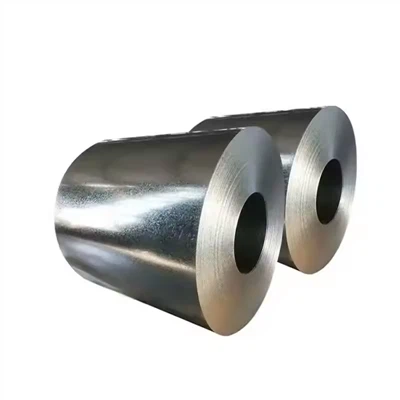
Galvalume steel coil is a type of sheet metal widely used in construction, home appliances, automotive, and industrial protective applications. Its core performance lies in its unique coating material and substrate structure. This material, formed by coating an aluminum-zinc alloy layer on a low-carbon steel substrate, combines excellent corrosion resistance, high-temperature resistance, and mechanical strength, making it an indispensable foundational material in modern industry.
Substrate: Low-Carbon Steel Substrate
The substrate for galvalume steel coil is typically low-carbon steel (such as standard cold-rolled steel strip like SPCC and DC01). Its carbon content is less than 0.12%, and it contains appropriate amounts of elements such as manganese and silicon to balance strength and workability. Low-carbon steel offers excellent ductility and formability, enabling it to be rolled into thin, uniform coils, providing a stable foundation for subsequent coatings to adhere. Furthermore, the purity of the substrate directly impacts the adhesion of the coating, so impurities such as sulfur and phosphorus must be strictly controlled during the production process.
Coating: Aluminum-Zinc Alloy's Synergistic Protection Mechanism
The core value of galvanized steel coil lies in its coating composition-typically a ternary alloy of 55% aluminum, 43.4% zinc, and 1.6% silicon (Galvalume® alloy). This composition achieves high performance through the following mechanisms:
1. Aluminum's Barrier Effect: Aluminum forms a dense aluminum oxide (Al₂O₃) film on the coating surface, isolating it from oxygen and moisture, providing long-term weathering resistance, particularly in high-temperature environments (such as roofing applications).
2. Zinc's Sacrificial Anodic Protection: As a more electrochemically active metal, zinc corrodes preferentially when the coating is damaged, thereby protecting the underlying steel substrate. This property is particularly important at cut edges or scratches.
3. Silicon Enhances Stability: The addition of a small amount of silicon inhibits excessive oxidation of the coating during high-temperature annealing and improves the alloy's adhesion to the steel substrate.
Auxiliary Elements and Coating Optimization
Some high-end galvanized steel coils are further coated with organic resins (such as polyester or silicone-modified polyester) on the surface of the coating, creating "galvanized color-coated steel sheets" to enhance scratch resistance, color durability, and UV resistance. Furthermore, the coating thickness (typically 50-180 g/m²) and uniformity are precisely adjusted using air knife control technology to meet the needs of different application scenarios.
Summary
The comprehensive performance of galvanized steel coils is determined by the strategic ratio of its mild steel substrate and aluminum-zinc alloy coating. This material, through its intermetallic synergy, achieves a balance of corrosion resistance (approximately 2-6 times that of ordinary galvanized steel), heat resistance (sustainable resistance to temperatures exceeding 300°C), and processability at a manageable cost, making it a preferred option for modern manufacturing that balances functionality and cost-effectiveness. In the future, with advances in alloy formulations and coating processes, the application of galvanized steel coils will further expand into demanding applications such as new energy and marine engineering.